
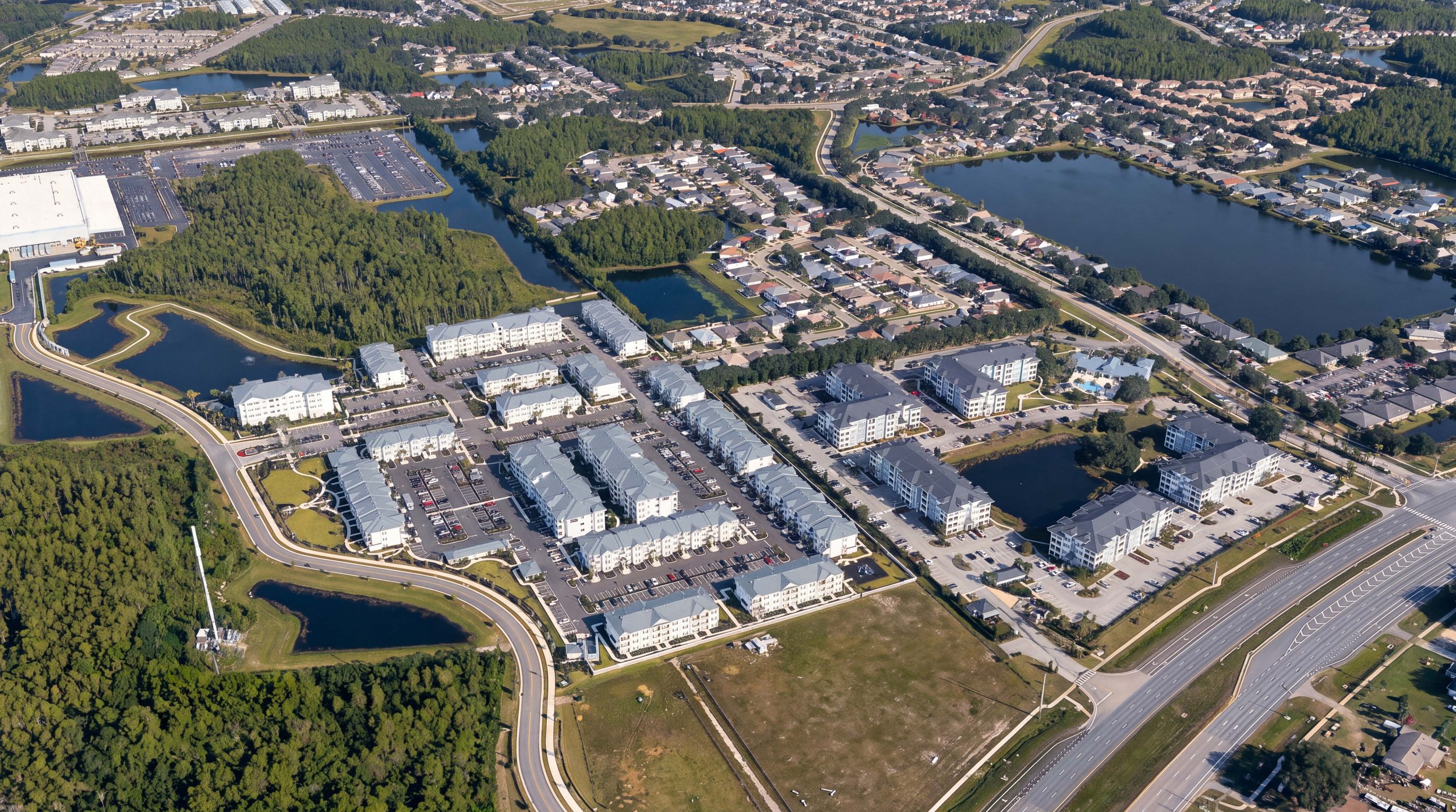
Many are questioning whether the speed of development and existing safety standards adequately protect those who live in these structures.
Pasco County continues to grow at a rapid pace. New apartment communities appear across Wesley Chapel, Lutz, and surrounding areas, drawing residents with modern amenities and convenient locations. Yet the devastating fire at Cobalt Apartments on August 20, 2026, has left many questioning whether the speed of development and existing safety standards adequately protect those who live in these buildings.
A lightning strike during an afternoon storm ignited a fire in Building 2, a nearly new four-story structure completed in 2024, which burned for approximately 25 minutes before emergency services were notified, with residents learning of the danger primarily through staff and neighbors rather than building alarms. The fire started above the NFPA 13R residential sprinkler system—which met Florida and Pasco County codes for low-rise buildings but did not require attic coverage—preventing early detection and control. The blaze caused extensive interior and roof collapses throughout the 104-unit building (83 occupied), leading county officials to condemn it as a total loss with residents unlikely to recover belongings before demolition, while neighboring buildings required fire-alarm repairs and temporary fire watch. Though management confirmed the complex met all required fire and life-safety codes and systems were functioning before the strike—with officials verifying compliance with current standards—the destruction of a nearly brand-new building has raised significant public concern about existing safety requirements.
Pressing Questions About Multi-Family Buildings
Why are fire-alarm and sprinkler inspections not performed more regularly on these large residential complexes? Codes require ongoing maintenance, testing, and inspections of alarm and extinguishing systems. Inspectors have authority to check for inadequate protection. When early warning fails during a real emergency—especially in attic spaces common to these designs—residents reasonably ask whether post-occupancy oversight is frequent or thorough enough.
How do these projects rise so quickly? Strong demand driven by Pasco’s growth encourages developers to move fast. Cobalt opened to residents in 2024 after relatively rapid construction. Efficiency is not the problem when codes are followed, but the public now wonders whether the pace favors speed and cost savings over additional safeguards that go beyond minimum requirements.
How can residents feel safe renting or buying new construction in the future? Confidence has been damaged. People moved into these complexes trusting builders, inspectors, and county approvals. After seeing an almost new building largely destroyed by fire, many question whether sprinkler systems truly protect the entire structure and whether fire alarms will sound when needed most. Simply meeting code no longer feels like enough assurance for those who lost their homes and belongings.
Would the county consider updating its building code toward more robust structural and safety standards similar to those used in South Florida? South Florida areas often require higher wind-design speeds than the standards typical for the Tampa Bay region, including Pasco. Florida’s statewide building code ranks among the strongest in the country for hurricane resistance and has improved significantly over the years. Local governments can adopt stricter amendments when a clear local need is shown. With high lightning activity in the Tampa Bay area and heavy multi-family wood-frame construction in Pasco, residents are asking whether requirements for attic sprinklers, better detection systems, lightning protection, or stronger structural features should be added for new multi-story apartments. A Pasco County elected official has indicated openness to reviewing measures that go beyond current minimums.
Resilience and Public Trust
Pasco faces regular severe weather. Lightning caused this fire. Hurricanes and tropical storms bring high winds, heavy rain, and structural stress. Newer buildings generally perform better under current Florida codes than older ones, yet the Cobalt outcome leaves many unsure whether these quickly built apartments would hold up in a major natural disaster. Wood-frame construction that meets today’s minimum standards can still suffer catastrophic damage when fire starts in unprotected spaces or when forces exceed design limits.
Residents have placed considerable trust in the builders constructing so many new apartment communities across the county. That trust is now strained. When nearly new buildings experience fires that leave them uninhabitable and residents unable to retrieve their belongings, questions about reliable sprinklers, working fire alarms, and overall durability become impossible to ignore.
County leaders, the building department, fire officials, and developers should offer clear answers and explore meaningful improvements. More transparent and regular inspection schedules, possible local code enhancements for protection and detection, better public explanation of what “code-compliant” actually means, and careful review of recent multi-family projects would help rebuild confidence.
Growth brings opportunity to Pasco. Safety must remain central to it. Residents deserve assurance that the homes they rent or purchase—especially those presented as modern and secure—will protect them when nature strikes. The Cobalt fire serves as a stark reminder that meeting minimum standards does not always equal the level of protection a community expects and needs. The discussion about stronger safeguards should continue without delay.
