
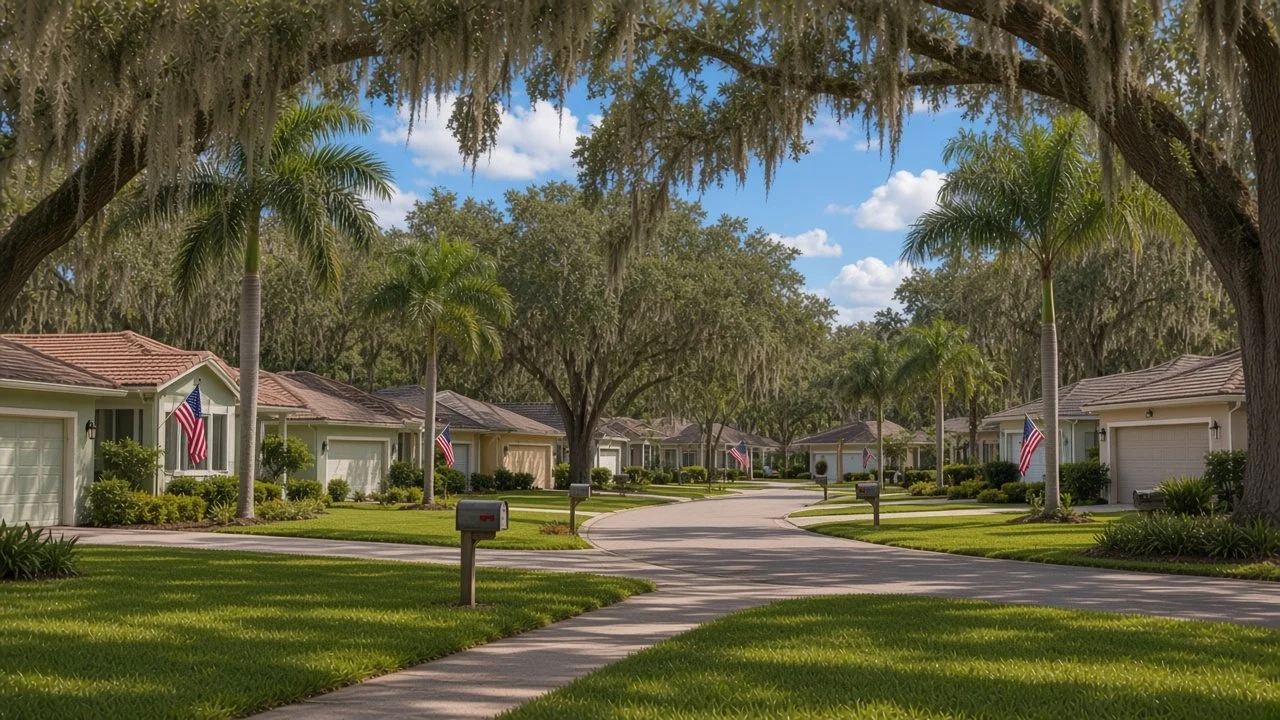
Homeowners who already hold (or qualify for) a homestead exemption on their primary residence would see a larger portion of their home’s assessed value shielded from non-school property taxes.
On November 3, 2026, Florida voters will decide three proposed amendments to the state constitution. All were referred by the Legislature and need 60% approval to pass. Two address fiscal and agricultural policy, while the third focuses on property taxes and is expected to have the most direct effect on Pasco County homeowners and local budgets.
Here is a clear, factual overview of each measure, with detailed attention to Amendment 3.
Amendment 1: Budget Stabilization Fund
This amendment would increase the constitutional cap on the state’s Budget Stabilization Fund (rainy-day reserve) from 10% to 25% of general revenue collections. It would require the Legislature to transfer the lesser of $750 million or the amount needed to reach the 25% cap each year (unless certain conditions are met) and permit withdrawals for critical state needs.
Amendment 2: Agricultural Tangible Personal Property Exemption
Amendment 2 would exempt tangible personal property—such as farm equipment, tools, and machinery—that is habitually located on agricultural land and used for agricultural production or agritourism from ad valorem taxation. If approved, the exemption would first apply for tax years beginning January 1, 2027.
Amendment 3: Increased Homestead Exemption and Related Property Tax Changes
Amendment 3 is the most wide-reaching of the three. It proposes several related changes to Florida’s property tax system.
What the amendment consists of:
• It increases the homestead exemption for all non-school property taxes to $150,000 in 2027 and $250,000 in 2028, then adjusts that amount annually for inflation. School district levies remain subject to the existing smaller exemption.
• It directs the Legislature to create a uniform procedure allowing counties and municipalities to further raise the homestead exemption (up to the full assessed value) for their own levies, and permits special districts to do the same subject to referendum approval.
• People who are not Florida residents as of December 31, 2026, would receive the current homestead exemption initially; the higher exemption would begin in their fifth year of eligibility (to the extent permitted by the U.S. Constitution).
• It lowers the annual assessment growth cap on non-homestead properties (second homes, rentals, commercial properties, etc.) from 10% to 5%.
• It requires counties and municipalities to use property tax revenue primarily for public safety, education and schools, infrastructure, natural resources, bond debt service, retirement benefits, and operations/administration.
• If approved, the changes take effect January 1, 2027.
Florida’s homestead exemption has a long history. Voters first approved a $5,000 exemption in 1934. The core exemption was increased to $25,000 by voters in 1980 (phased in over several years). In 2008, voters approved an additional $25,000 exemption that applies only to non-school taxes on assessed value between $50,000 and $75,000, creating the effective $50,000 structure most homeowners know today. A 2024 constitutional amendment added annual inflation adjustments to that second tier, so the combined non-school homestead exemption stands at approximately $51,411 for the 2026 tax year. Amendment 3 would represent a much larger step-up in the non-school exemption amount.
Homeowners who already hold (or qualify for) a homestead exemption on their primary residence would see a larger portion of their home’s assessed value shielded from non-school property taxes.
Raising the non-school exemption from the current roughly $51,000 level to $150,000 in 2027 and $250,000 in 2028 means lower taxable value and therefore lower tax bills for the county, municipal, and most special-district portions of the bill. School taxes are largely unaffected.
In Pasco County, estimates based on recent millage rates show that a typical $350,000 homesteaded home could see annual non-school savings in the range of roughly $1,900 to $2,200 once the full $250,000 exemption is in place in 2028 (exact amounts vary by precise assessed value and local rates). Homes assessed at or below $250,000 could see their non-school property tax liability reduced to zero or near zero. Mid-range and higher-value homes in areas such as Wesley Chapel, Land O’ Lakes, and Trinity would still receive substantial dollar savings on the non-school portion of their bills. Existing “Save Our Homes” assessment caps and portability rules remain unchanged.
Florida’s economy also provides broader context that some supporters cite when discussing the feasibility of larger homestead relief. The state welcomed a record 143.3 million visitors in 2025, generating tens of billions of dollars in visitor spending and significant sales tax and tourist development tax revenue. Tourism has long been a major driver of Florida’s overall tax base (alongside other sources), and proponents argue this diversified revenue stream — much of it paid by non-residents — can help support public services even if local governments collect less from homesteaded properties.
Opponents, including many Florida sheriffs, firefighter associations, and local government officials, have expressed concerns about the scale of revenue reduction for cities and counties. Pasco County estimates discussed publicly earlier this year projected roughly $96 million in general-fund property tax revenue loss in the first year under the $150,000 exemption (about 22% of the relevant millage revenue), rising to approximately $156 million (around 36%) once the $250,000 exemption takes full effect. Similar percentage impacts were noted for fire and rescue taxing units.
Statewide projections from economists place the recurring annual impact on local governments in the range of several billion dollars once fully phased in. Critics worry this could lead to reduced funding for public safety staffing and response times, infrastructure projects, parks, libraries, or other services; higher fees and assessments; or millage increases on remaining taxable property (including rentals and commercial buildings). Some analyses also note that renters could experience higher costs if landlords pass along any tax or fee increases, and that newer residents face a delayed full benefit due to the five-year residency provision.
Voters can review the exact ballot language and sample ballots through the Pasco County Supervisor of Elections office. Early voting and vote-by-mail options will be available in the weeks ahead.
